Subtle spec differences between the Pixel Buds 2a and Pixel Buds Pro 2 point to deeper design decisions from Google, hinting at tuning, battery, and audience strategies.
While Google’s official comparison between the Pixel Buds Pro 2 and Pixel Buds 2a looks straightforward at first glance, a closer look uncovers hidden clues about how these earbuds were engineered and why. The differences are not just about missing features they reveal Google’s underlying design philosophy for each product line.
Listening time shows a different power profile
On paper, the Pixel Buds Pro 2 last 8 hours with ANC on and 30 hours with the case, while the Pixel Buds 2a last 7 hours and 20 hours respectively. That single hour of listening time per charge and the 10 hour gap in total battery life suggest more than just smaller batteries.
The Pro 2’s extra endurance likely comes from a combination of larger internal batteries and more aggressive power optimization in the ANC system. The Buds 2a’s slightly shorter life may indicate that their ANC processing is less adaptive and more constant, which is simpler to run but less battery efficient.
ANC tuning hints at different priorities
The Pro 2 feature Active Noise Cancellation with Silent Seal 2.0, a system designed to adapt the sound profile to the unique shape of a user’s ear canal. This adaptive sealing improves low frequency noise blocking and keeps audio balanced even when the earbuds shift during movement.
The Pixel Buds 2a, by contrast, are listed with Active Noise Cancellation only. That likely means a fixed ANC tuning a one size fits most profile. While less precise, this could actually be more comfortable for casual listeners, as it avoids the “ear pressure” sensation that some adaptive ANC systems create.
Feature trimming reveals design philosophy
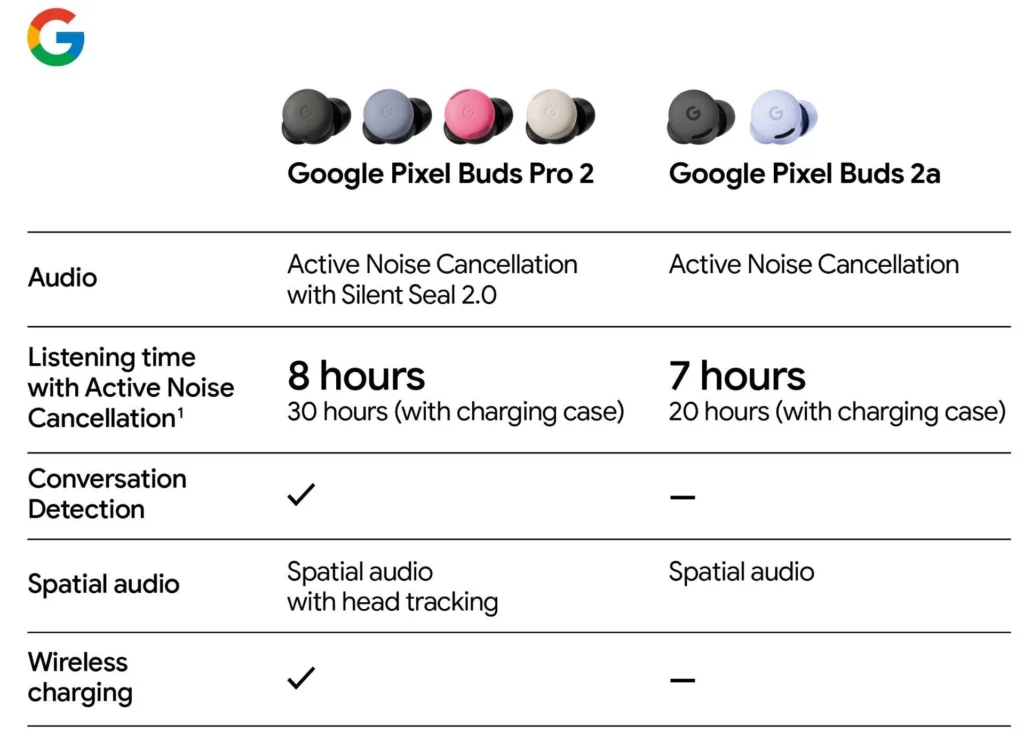
The absence of Conversation Detection and wireless charging in the 2a is not just about cost cutting it points to Google’s intent to simplify.
- No Conversation Detection means fewer always-on microphones monitoring speech, which can both reduce accidental pauses in music and cut down power drain.
- No wireless charging means the case can be slimmer, lighter, and more affordable to manufacture, which might also improve durability by removing a common heat generating component.
These changes suggest the Buds 2a are tuned for reliable, no-frills daily use rather than premium convenience.
Spatial audio implementation reveals target audience
Both models support spatial audio, but only the Pro 2 adds head tracking. This points to an audience split:
- Pro 2 owners are likely gamers, movie enthusiasts, and early adopters who want precision immersion.
- 2a buyers are more casual media consumers who want theater like sound without the extra motion sensors and processing overhead.
Color choices hint at branding strategy
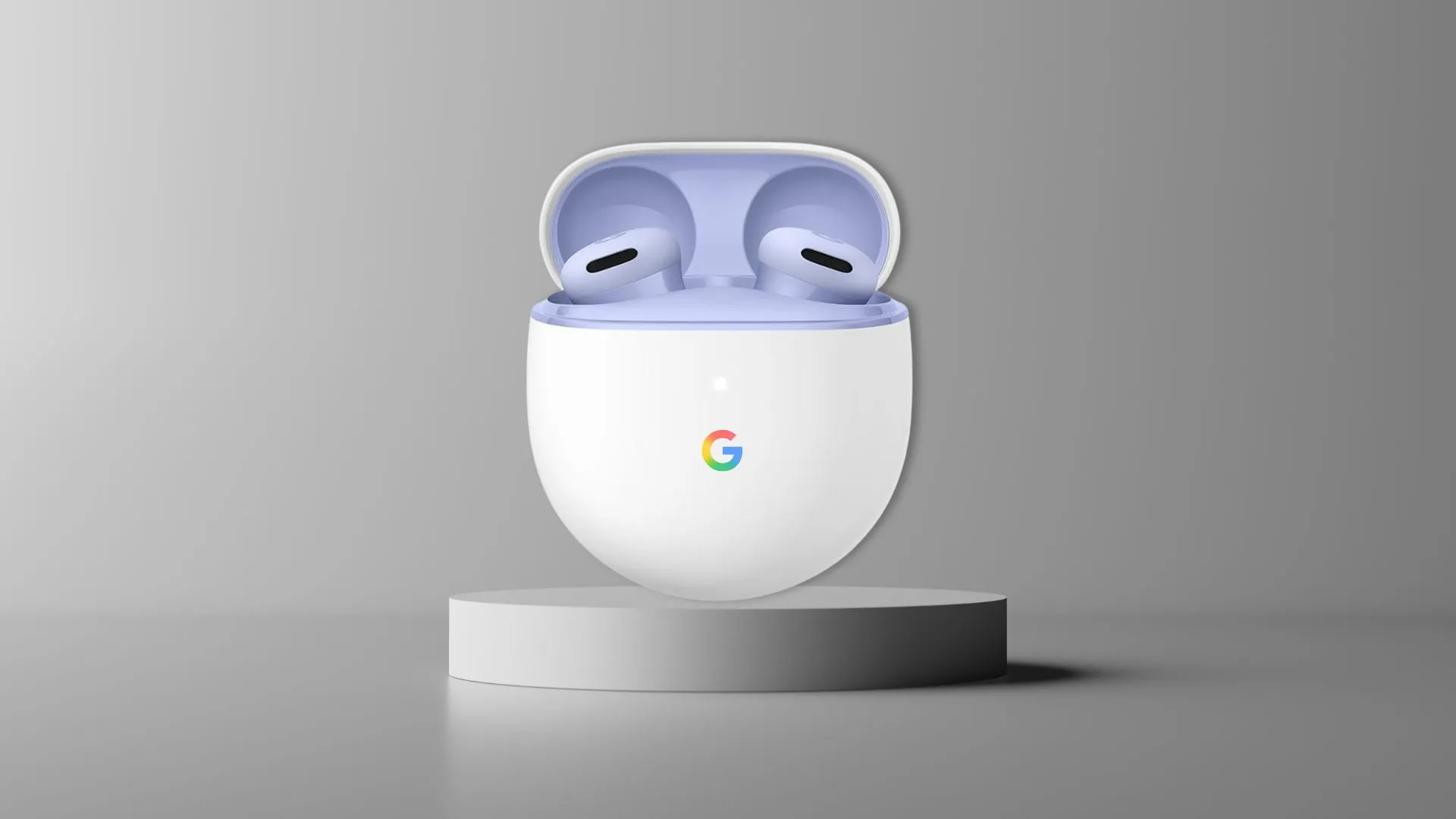
The Pro 2 launch palette leans toward professional, muted tones, while the 2a pastel blue option feels fresh and playful. This subtle shift indicates Google is segmenting not just by price and performance, but also by style appeal, aiming to hook a younger or trend driven demographic.
These hidden differences make it clear: the Pixel Buds Pro 2 and Pixel Buds 2a are not just “premium” and “budget” versions of the same earbuds. They are two different interpretations of what wireless earbuds should be, each tuned for a specific listener profile. The Pro 2 aim to push the limits of smart audio technology, while the 2a aim to deliver the essentials in a streamlined, approachable package.