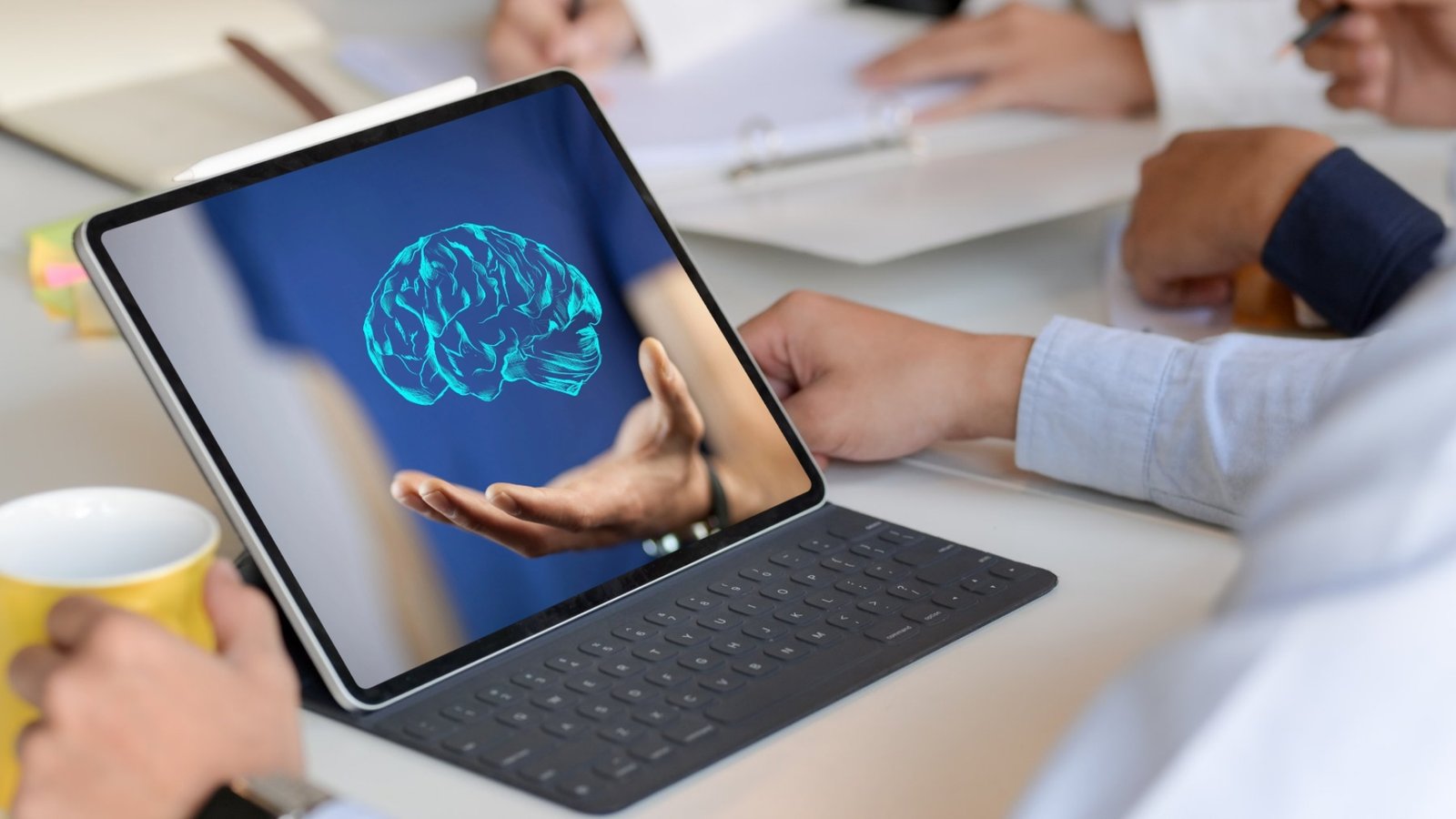
Apple’s latest breakthrough brings thought-powered control to the iPad, marking a transformative moment in assistive tech and human-computer interaction. A demonstration by neurotech firm Synchron shows a user navigating an iPad using only his mind, enabled by Apple’s Brain-Computer Interface (BCI) Human Interface Device protocol built into iOS 26 and iPadOS 26.
In the video, Mark, a participant in Synchron’s COMMAND clinical trial living with ALS, effortlessly scrolls the Home Screen, launches apps, and composes text without using his hands, voice, or eyes. The system harnesses Apple’s accessibility feature “Switch Control,” repurposed to interpret decoded neural signals.
This functionality becomes possible through Synchron’s Stentrode implant, which is placed via a blood vessel near the brain’s motor cortex. It captures motor-intention signals and transmits them wirelessly to an external decoder, which then interfaces directly with the iPad using the new BCI HID standard.
Dr. Tom Oxley, Synchron’s founder and CEO, emphasized that this is the world’s first demonstration of native, thought-driven control of an Apple device, showcasing a glimpse into a future where cognitive input becomes a mainstream mode of interaction.
Mark shared how regaining this mode of control has reawakened his autonomy: he can message loved ones, catch up with news, and stay connected—all through thought alone. For him, the technology has restored more than just functionality—it has brought back a meaningful part of his life.
Apple is not manufacturing the implant, but its integration of the BCI HID protocol with Switch Control enables third-party solutions like Synchron’s to connect directly with Apple devices. This collaboration underscores Apple’s enduring commitment to accessibility and innovation.
Synchron’s endovascular approach avoids open-brain surgery, making the technology less invasive and more scalable. To date, ten patients have received the implant in clinical trials, and the company is progressing toward larger-scale studies and broader rollouts.
While public enthusiasm for brain-implant technology remains cautious—only around 11 percent of Americans express openness to such devices, according to a 2024 YouGov poll—this breakthrough represents a milestone in assistive technology and opens the door to a future once imagined only in science fiction.
Broader adoption of the BCI HID protocol across Apple’s ecosystem appears likely before the end of 2025, as the company prepares to release developer standards that could spur new applications and wider accessibility for users with severe mobility challenges.