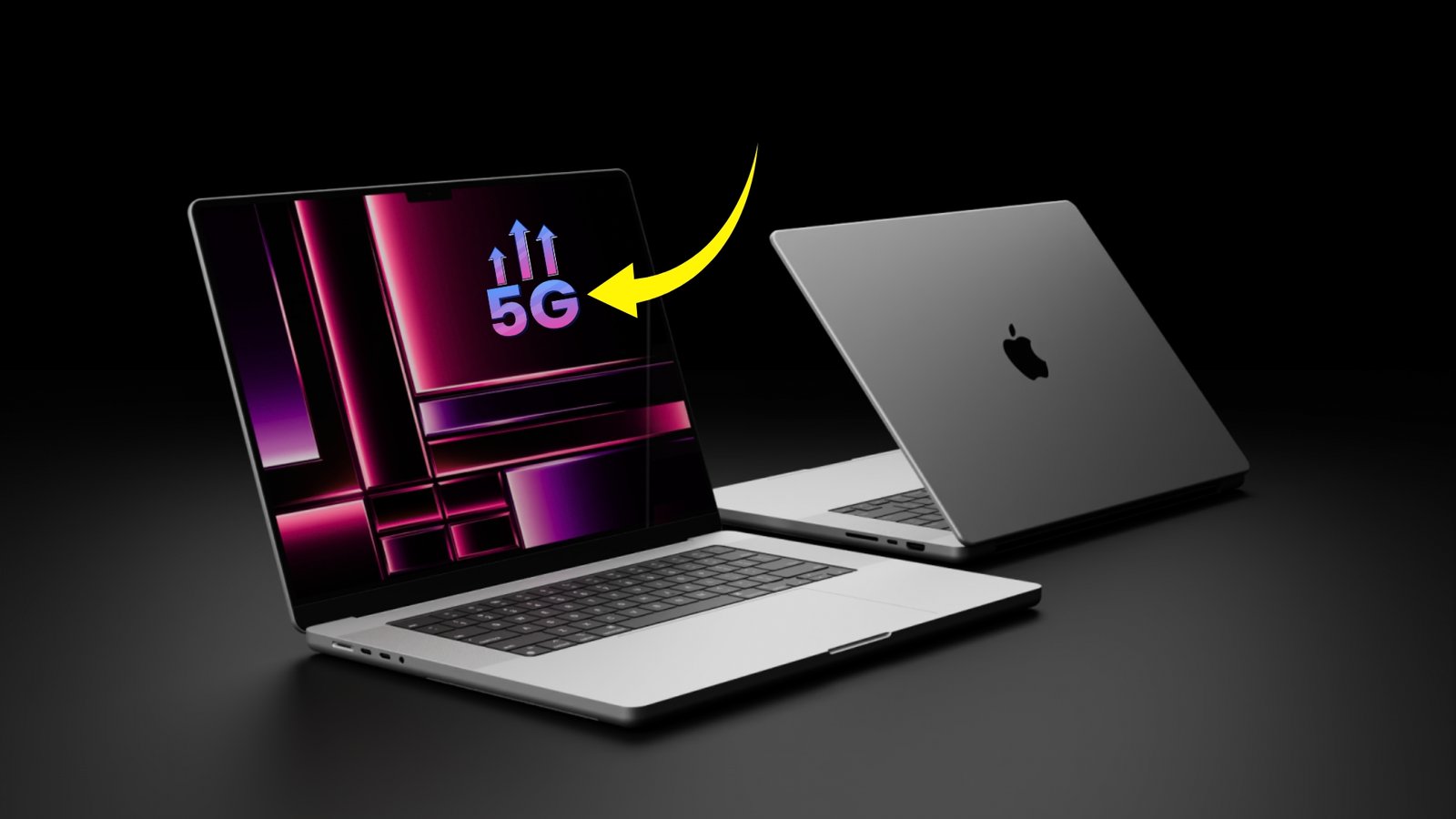
Apple is reportedly developing its first MacBook Pro with built-in 5G connectivity, signaling a significant shift in its laptop offerings. This move aims to provide users with seamless internet access, even in areas lacking Wi-Fi infrastructure. The integration of 5G into MacBooks could enhance productivity and security by reducing reliance on public networks.
Recent code discovered in pre-released macOS builds reveals evidence of a prototype MacBook Pro, codenamed “t6050,” powered by the upcoming M5 Pro chip and featuring Apple’s own “Centauri” (C1) 5G modem.
Industry insiders suggest that Apple is actively investigating cellular MacBooks, with a possible release timeframe of early to mid-2026. However, some reports caution this could slip into 2027 or beyond depending on development pace.
This push for 5G aligns with Apple’s broader strategy of embedding its own cellular modems across its product lines, reducing dependence on Qualcomm. The C1 modem first appeared in the iPhone 16e, with second-gen versions (C2, C3) expected in future devices.
Still, Apple’s careful rollout suggests early models may focus on the highest-end Pro series. A full line of cellular-enabled MacBooks might take additional time—even once the hardware is ready.
In practice, a 5G-equipped MacBook Pro could provide uninterrupted work in transit, on-location, or anywhere away from reliable Wi-Fi—even during flights or outdoor shoots. The convenience and added security of bypassing unsecured public hotspots could appeal to many professionals.
That said, battery life, cost, and internal space constraints remain key considerations. Apple’s integrated design may mitigate some issues through efficiency gains, but these factors remain central to rollout decisions.
As of mid-August 2025, there’s no official word yet from Apple—but a cellular MacBook Pro could arrive as soon as late 2025 or more likely in 2026, depending on testing and component readiness.