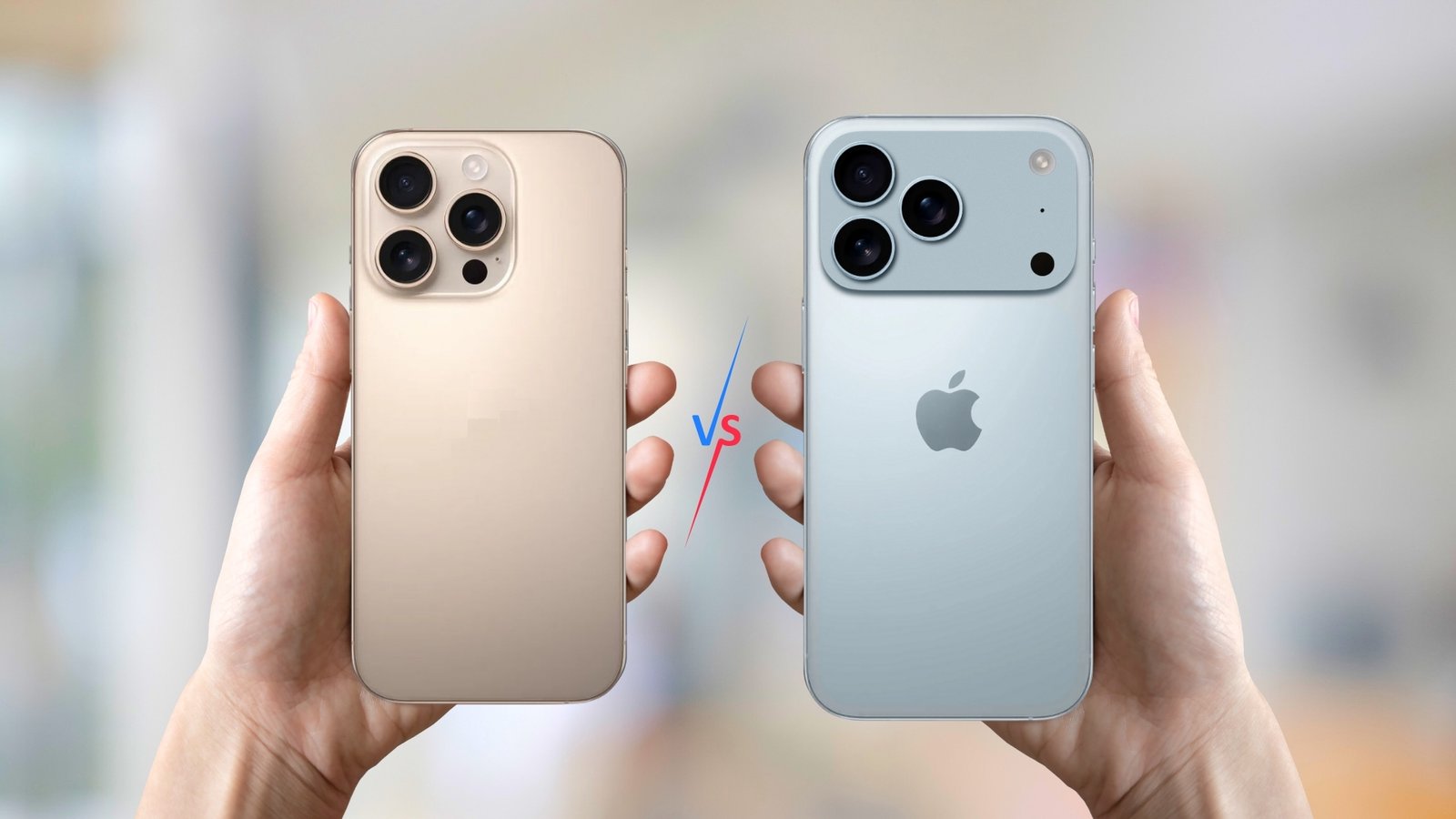
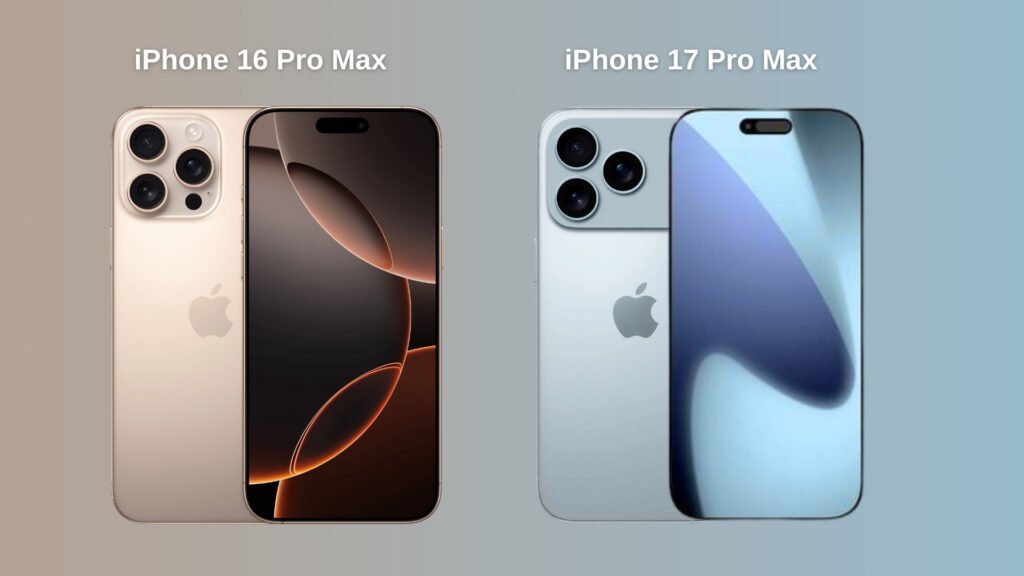
iPhone 16 Pro Max set a high bar, but the upcoming iPhone 17 Pro Max looks ready to raise it even higher with sharper cameras, boosted power, and next-gen video. This battle between two flagships is more than just upgrades it’s Apple redefining premium.
Design and Build Quality
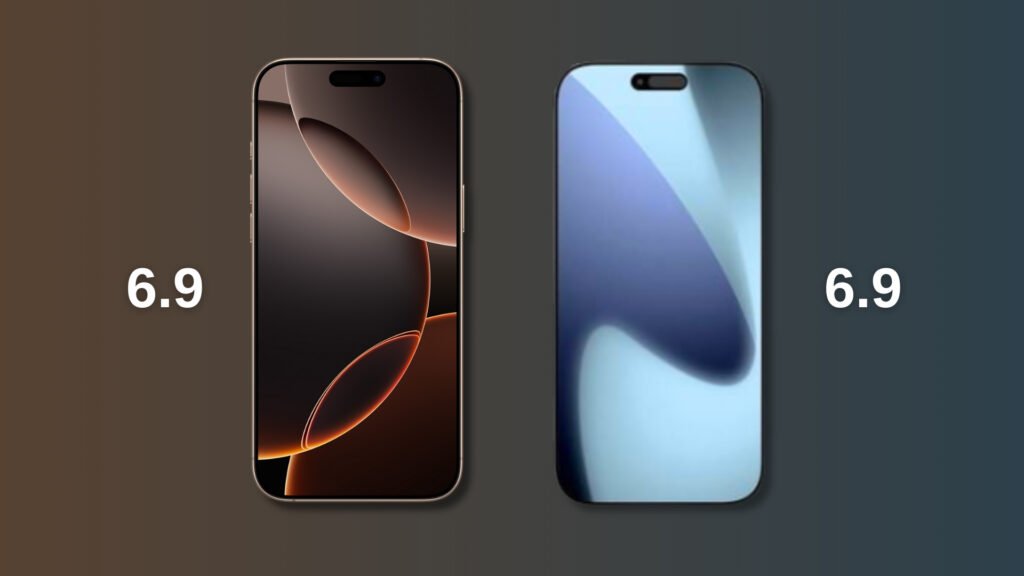
The iPhone 16 Pro Max brings a titanium frame, glass panels, and a 6.9-inch LTPO OLED screen with a 91.4% screen-to-body ratio. Its construction balances durability with comfort, holding an IP68 certification for water and dust resistance.
The iPhone 17 Pro Max is expected to keep the titanium finish but refine its dimensions. Its display slightly improves coverage at 92.2%, maintaining 6.9 inches but with thinner bezels and Apple newest Ceramic Shield protection.
Display and Visual Experience
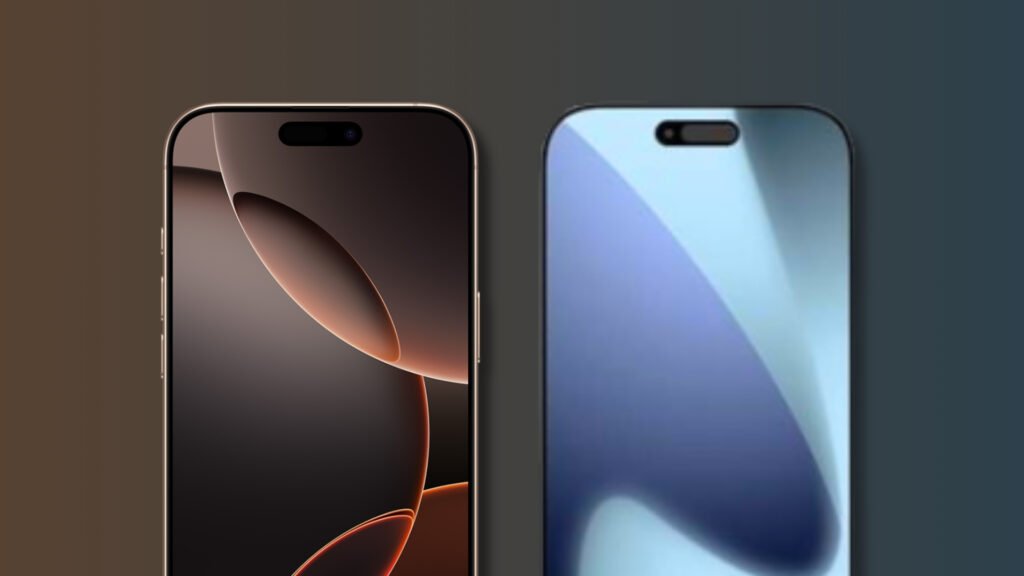
iPhone 16 Pro Max dazzles with Super Retina XDR OLED at 120Hz, HDR10, Dolby Vision, and brightness up to 2000 nits. Gamers and movie lovers enjoy deep contrast and smooth playback.
For the iPhone 17 Pro Max, Apple continues with OLED technology, but enhancements in efficiency and color calibration are expected. Better HDR tuning and refined touch responsiveness push its visual edge forward.
Performance and Processing
Powering the iPhone 16 Pro Max is the A18 Pro chip, a 3nm design combining a hexa-core CPU and a 6-core GPU. It handles demanding apps, ProRes video, and multitasking with ease.
The iPhone 17 Pro Max is rumored to ship with the A19 Pro chip, also built on 3nm. It pairs with 12GB RAM, ensuring higher speed and smoother AI-driven functions, placing it at the frontier of mobile computing.
Camera Innovations
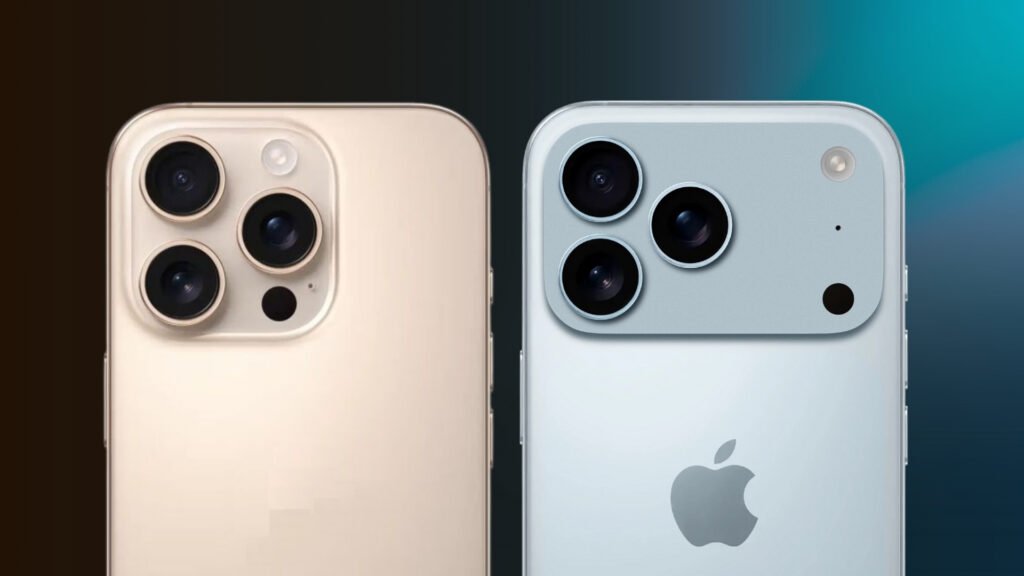
The iPhone 16 Pro Max carries a 48MP main sensor, 12MP periscope telephoto with 5x zoom, and a 48MP ultrawide. Video capture reaches 4K 120fps with Dolby Vision and spatial recording.
The iPhone 17 Pro Max is tipped for a seismic jump. Its telephoto rises to 48MP with multiple focal lengths and 8x optical zoom. 8K video recording and refined LiDAR mapping mark a leap in creative power.
Selfie and Front Camera
Apple keeps a 12MP front camera with OIS on the iPhone 16 Pro Max, paired with a 3D depth sensor for Face ID and spatial video recording.
On the iPhone 17 Pro Max, the front lens grows to 24MP, offering sharper video calls and improved Dolby Vision output. Its sensor upgrades target low-light clarity and stabilized video content.
Battery and Charging
The iPhone 16 Pro Max packs a 4685 mAh battery, offering strong longevity. Charging includes 50% fill in 30 minutes via wired power, MagSafe at 25W, and Qi2 wireless.
iPhone 17 Pro Max battery capacity is not yet confirmed but is expected to improve efficiency through chip and software optimization. Its charging speeds remain similar, keeping 25W wireless and MagSafe support.
Connectivity and Extras
The iPhone 16 Pro Max offers Wi-Fi 7, Bluetooth 5.3, and a second-gen UWB chip. USB-C 3.2 Gen 2 support enables faster data transfer and display output.
For the iPhone 17 Pro Max, connectivity shifts to Bluetooth 5.4 while retaining Wi-Fi 7 and UWB. Satellite SOS and Find My integration continue to enhance reliability in remote regions.
Software Experience
The iPhone 16 Pro Max launched with iOS 18 and has updates planned through iOS 18.6. It introduces refined AI, improved widgets, and spatial video features.
The iPhone 17 Pro Max will run iOS 26, signaling a huge leap in software maturity. Enhanced AI features, deeper iCloud integration, and extended security layers make it a futuristic ecosystem hub.
Storage and Memory
The iPhone 16 Pro Max offers 8GB RAM with options of 256GB, 512GB, and 1TB storage, suiting heavy app use and ProRes video editing.
In contrast, the iPhone 17 Pro Max elevates RAM to 12GB, boosting multitasking and professional-grade workflows. Storage tiers remain identical but with faster NVMe read-write speeds.
Pricing and Availability
The iPhone 16 Pro Max launched at $1,199, with financing options starting at $49.95 per month. It comes in Black, White, Natural, and Desert Titanium finishes.
The iPhone 17 Pro Max has not been officially priced but is expected to align near $1,299, reflecting its camera and RAM upgrades. Launch is projected for late 2025.