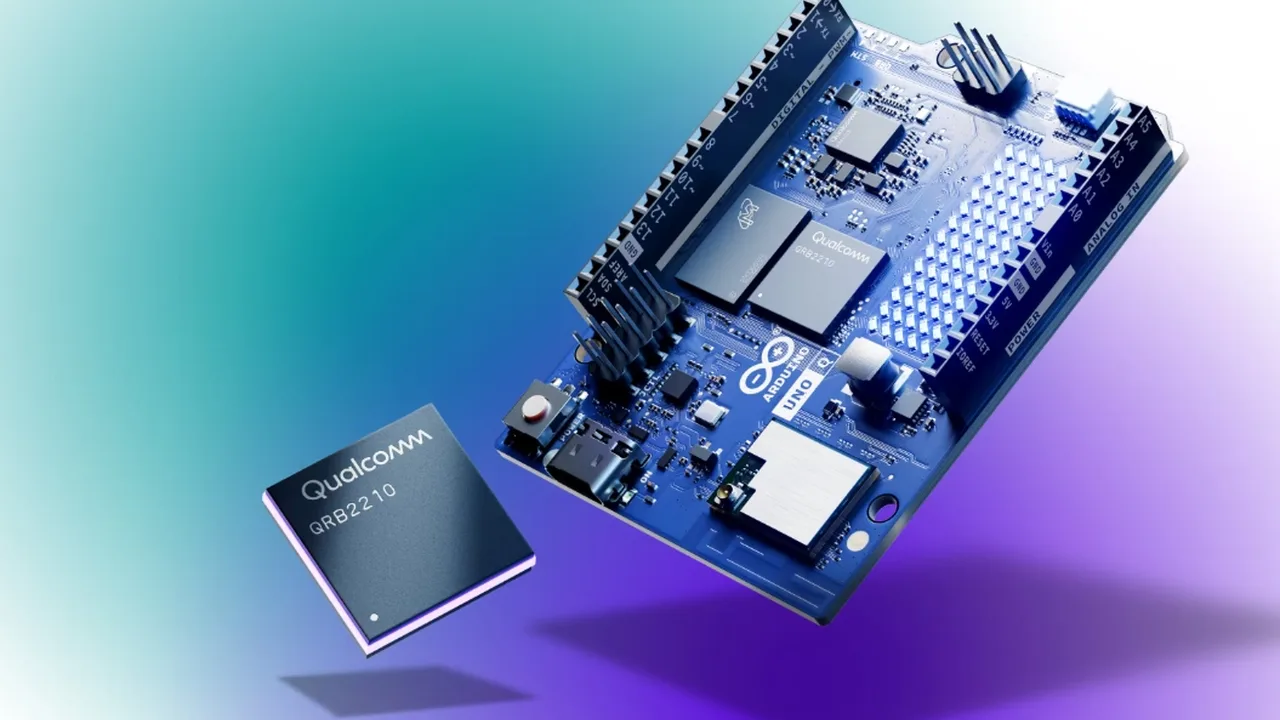
Qualcomm: Qualcomm acquires Arduino while keeping its open-source independence. The $44 Arduino UNO Q, powered by Qualcomm’s Dragonwing QRB2210, brings AI-ready performance and a new App Lab platform for easier, faster development.
Qualcomm has announced that it will buy Arduino, the world’s most popular open-source electronics platform. The deal aims to bring Qualcomm’s powerful AI and edge computing tech to Arduino’s huge community of over 33 million developers. Despite the acquisition, Arduino will stay independent and continue supporting a wide range of chips from different makers while keeping its open-source spirit alive.
A New Era for 33 Million Makers
Arduino’s 33 million active users will, as a result of the acquisition, gain access to Qualcomm’s powerful technology stack and global reach, giving them the tools to bring AI and connected intelligence into everything from classroom experiments to industrial systems.
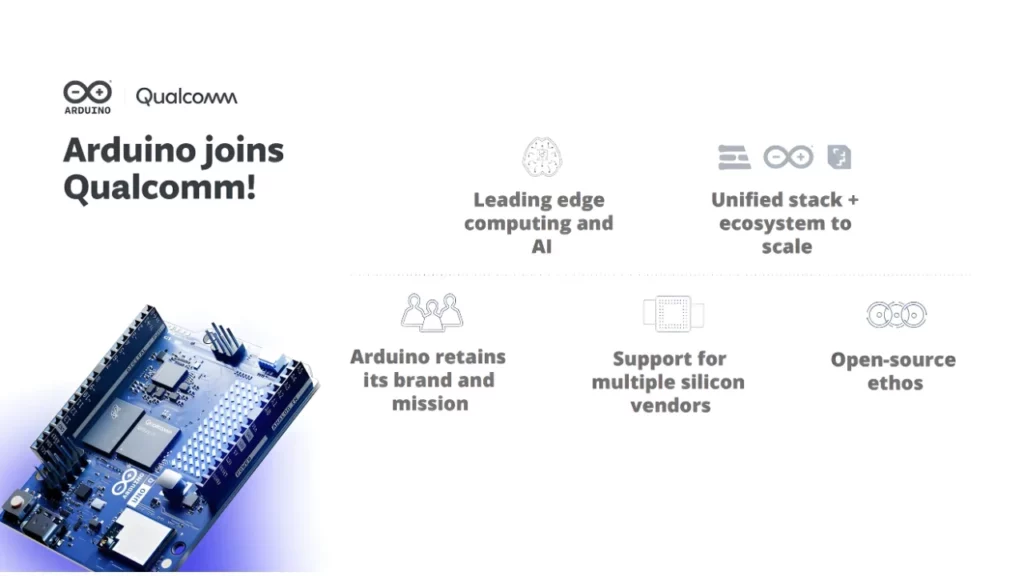
This partnership bridges Qualcomm’s high-performance hardware with Arduino’s simplicity, helping students, educators, and professionals create smarter projects faster. With Qualcomm’s ecosystem behind it, Arduino users can now take their projects from prototypes to market-ready devices with greater ease and power.
Nakul Duggal, Group General Manager at Qualcomm Technologies, said the collaboration aims to “democratize access to AI and computing.” Arduino CEO Fabio Violante added that the partnership will “supercharge innovation while keeping development open for everyone.”
Also Read: Qualcomm Confirms Snapdragon 8 Elite Gen 5 Name Ahead of Launch
Introducing the Arduino UNO Q
Alongside the acquisition, Arduino unveiled its most powerful product yet the Arduino UNO Q, a next-generation single-board computer built for the AI era. The board features a “dual-brain” architecture with a Linux Debian-capable microprocessor and a real-time microcontroller, combining the best of both worlds for intelligent and responsive computing.
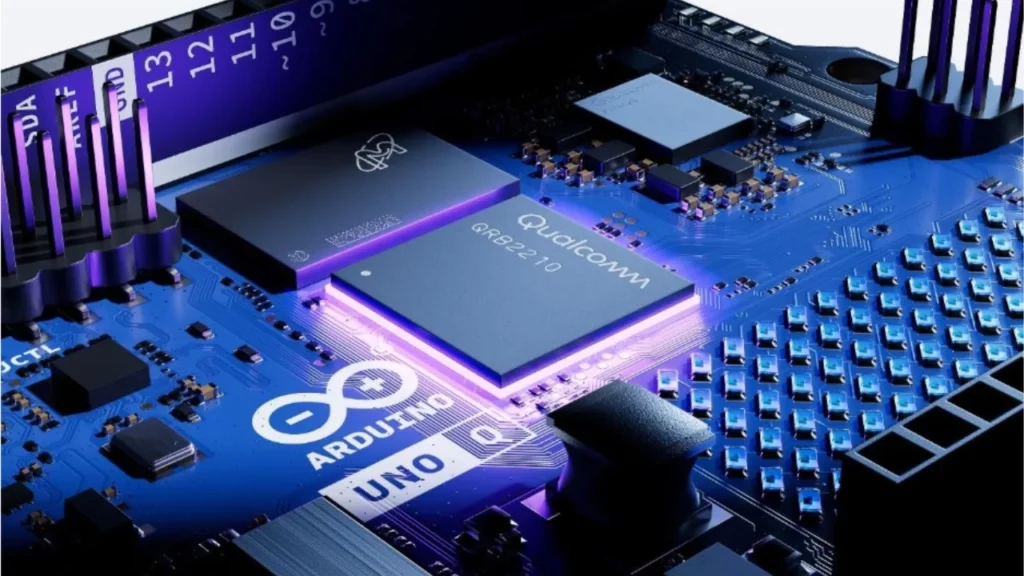
The UNO Q is powered by the Qualcomm Dragonwing™ QRB2210 processor, capable of running a full Linux environment with integrated AI and graphics performance, while the STMicro STM32U585 MCU manages real-time control. According to Qualcomm, this setup is designed to “help enable AI-powered vision and sound solutions that react to their environment, ranging from sophisticated smart home systems to industrial automation applications.”
This combination allows the UNO Q to tackle AI-driven workloads such as image recognition, sound analysis, and robotics control on a single board. It supports Wi-Fi 5, Bluetooth 5.1, MIPI camera and display interfaces, and USB-C, while staying compatible with the Arduino IDE and classic UNO form factor.
Priced at $44 for the 2GB RAM / 16GB version, pre-orders are live now, with shipping beginning October 24, 2025. A 4GB / 32GB variant is planned later for about $59.
Arduino App Lab – AI Made Simple
Debuting alongside the UNO Q, the Arduino App Lab is a new, open-source development environment that unifies Real-time OS, Linux, Python, and AI workflows. Integrated with Edge Impulse, it helps developers easily create and optimize machine learning models for object detection, sound recognition, and anomaly tracking.
App Lab makes it possible to develop, test, and deploy AI solutions from one interface, turning complex workflows into something approachable even for beginners. Together, the UNO Q and App Lab simplify the process of bringing AI to life, from classroom learning to commercial deployment.
Also Read: iQOO 15 Appears on Certifications Hinting at an Upcoming Launch
Staying True to Open Source
Both companies reaffirmed that Arduino’s open-source mission will remain untouched. Co-founder Massimo Banzi said, “By joining Qualcomm Technologies, we will bring cutting-edge AI tools to our community while staying true to what has always mattered most: simplicity, affordability, and openness.”
The acquisition will mark a new era where Qualcomm’s performance meets Arduino’s creativity, empowering millions to build the next generation of smart, AI-driven solutions.